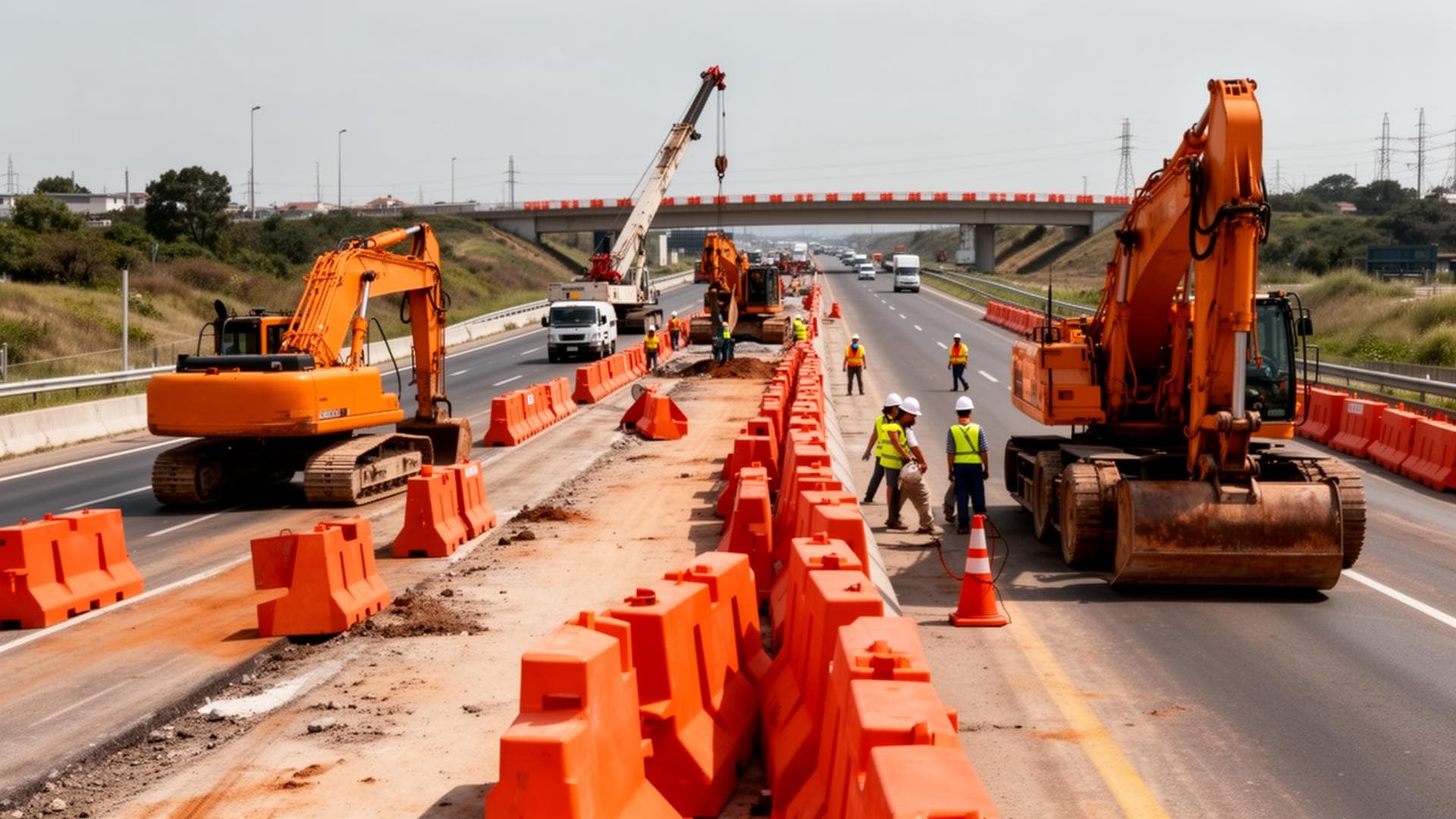
How Do Construction Vehicle Accidents Happen on Public Roads?
Construction vehicles — including excavators, bulldozers, front-end loaders, dump trucks, concrete mixers, and cranes — increasingly operate on or adjacent to public roadways. These accidents occur through: vehicles entering and exiting construction zones without proper flagging or traffic control, debris falling from dump trucks onto roadways and other vehicles, construction vehicles making wide turns on public roads and striking passenger vehicles, pedestrians, or cyclists, crane collapses affecting adjacent roads and buildings, and dump truck rollovers caused by overloading or unstable loads.
Who Is Liable for a Construction Vehicle Accident?
Construction vehicle accidents typically involve multiple liable parties: The construction company — as the employer, the construction company is vicariously liable for its employees' negligent operation of equipment under respondeat superior. The general contractor — even if a subcontractor's vehicle caused the accident, the general contractor may be liable for failing to enforce safety protocols or maintain adequate traffic control. Equipment manufacturers — if a vehicle defect (brake failure, hydraulic system malfunction, structural failure) caused the accident, the manufacturer faces strict product liability. Government entities — state and local governments that issue construction permits have a duty to ensure adequate traffic control plans are in place. If the traffic control plan was inadequate or not followed, government liability may exist.
What Role Do OSHA and DOT Regulations Play?
Construction vehicle operations are governed by: OSHA standards (29 CFR 1926) governing construction safety, including requirements for backup alarms, spotters, load limits, and operator training. DOT regulations for construction vehicles operating on public roads, including weight limits, lighting requirements, and slow-moving vehicle markings. MUTCD standards (Manual on Uniform Traffic Control Devices) governing construction zone signage, flagging, and traffic control. Violations of these regulations constitute negligence per se in most jurisdictions — meaning the violation itself proves negligence without requiring additional evidence of fault.
What Injuries Result from Construction Vehicle Accidents?
The massive weight and size of construction equipment means these accidents produce catastrophic injuries: crush injuries, amputations, traumatic brain injuries, spinal cord injuries, and fatalities. Compensation in construction vehicle cases is often substantial due to the severity of injuries and the clear duty of care owed by construction companies. Contact Bond Legal at (866) 423-7724 for a free case evaluation.