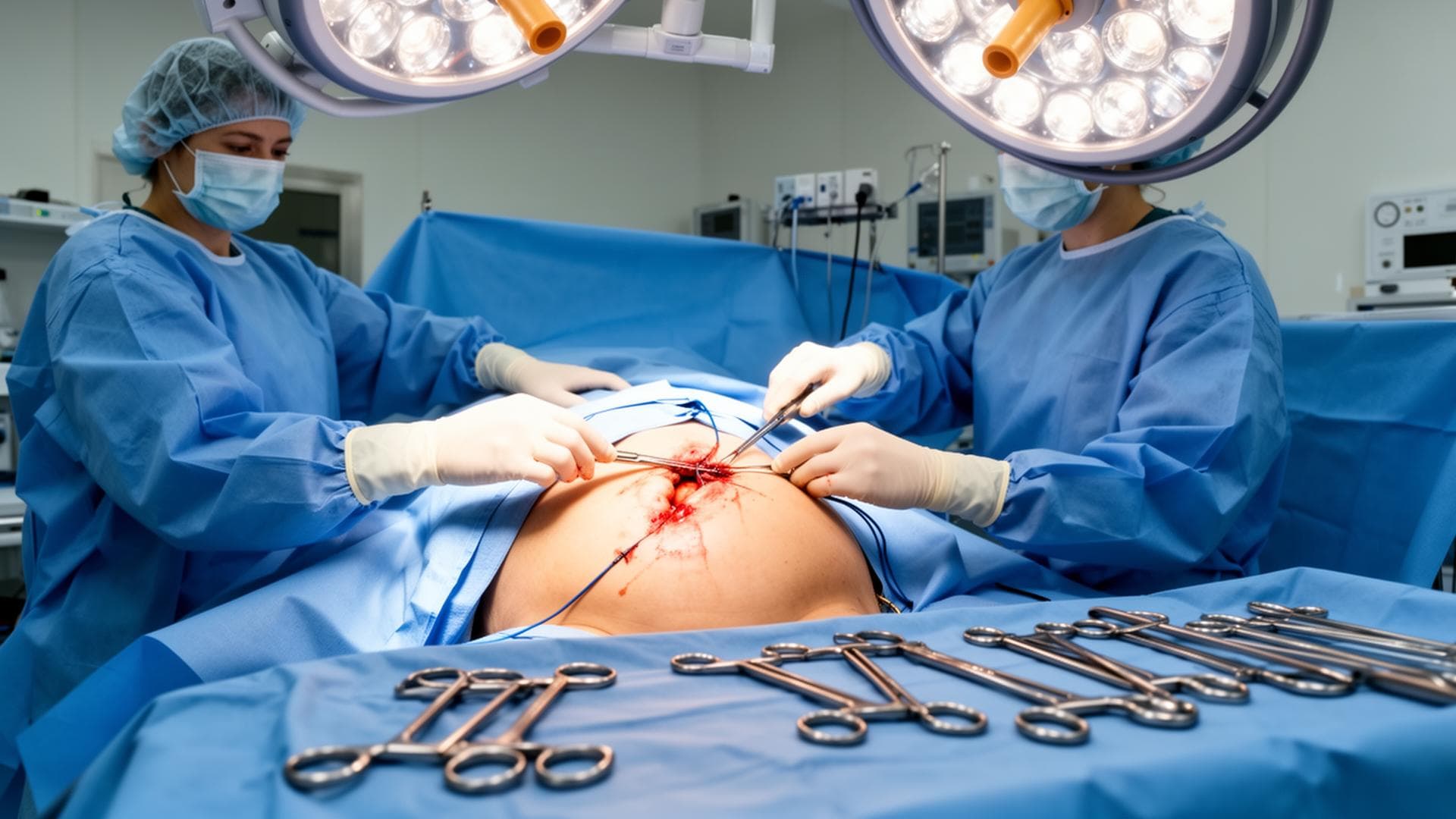
Why Are C-Section Delays So Dangerous?
When a fetus is in distress during labor, every minute of oxygen deprivation increases the risk of permanent brain damage. The medical standard — codified by ACOG (American College of Obstetricians and Gynecologists) and widely adopted by hospitals — requires the capability to begin a cesarean delivery within 30 minutes of the decision to operate (the 'decision-to-incision' interval). Many clinical situations demand faster response: a complete placental abruption, umbilical cord prolapse, or sustained fetal bradycardia may require delivery within 10–15 minutes to prevent irreversible brain injury. When hospitals fail to meet these timelines due to inadequate staffing, unavailable operating rooms, delayed physician response, or failure to recognize the urgency of the situation, the resulting injuries can be catastrophic — including cerebral palsy, HIE, and death.
What Medical Situations Require Emergency C-Section?
The most common indications for emergency cesarean delivery include: Prolonged fetal bradycardia — a sustained drop in fetal heart rate below 110 bpm lasting more than 10 minutes, indicating severe fetal compromise. Umbilical cord prolapse — the cord slips ahead of or alongside the baby, becoming compressed and cutting off blood and oxygen supply. Placental abruption — the placenta separates from the uterine wall before delivery, causing hemorrhage and depriving the fetus of oxygen. Uterine rupture — a tear in the uterine wall, particularly in patients with prior cesarean scars (VBAC/TOLAC patients). Failed operative vaginal delivery — when forceps or vacuum extraction attempts fail and continued vaginal delivery efforts place the baby at risk. Category III fetal heart rate tracings — the most concerning pattern under NICHD classification, including absent variability with recurrent late decelerations, bradycardia, or sinusoidal pattern.
What Is the '30-Minute Rule' and Is It Always Sufficient?
The ACOG 30-minute decision-to-incision standard has been widely adopted but is increasingly recognized as a maximum threshold rather than a target. Research published in the *American Journal of Obstetrics and Gynecology* has shown that for certain emergencies — particularly cord prolapse and placental abruption — outcomes are significantly better when delivery occurs within 10–15 minutes. The 30-minute rule means hospitals must have the infrastructure to perform an emergency C-section within 30 minutes at all times: an available operating room, anesthesia capability, surgical nursing staff, and an obstetrician either on-site or within rapid response distance. Hospitals that cannot meet this standard should not be accepting laboring patients.
What Causes C-Section Delays in Hospitals?
Common systemic failures that lead to delayed C-sections include: Understaffing — particularly during nights, weekends, and holidays when anesthesiologists, OR nurses, or obstetricians may not be immediately available on the labor floor. Failure to escalate — nurses or junior residents recognizing fetal distress but failing to communicate urgency to the attending physician promptly. Misinterpretation of fetal monitoring — incorrectly classifying a Category III tracing as Category II, leading to delayed intervention. VBAC management failures — attempting vaginal birth after cesarean without adequate monitoring or surgical backup, then delaying the decision to convert to C-section when uterine rupture occurs. Operating room conflicts — when the only available OR is occupied by another procedure and hospital protocols do not prioritize emergency obstetric cases.
What Injuries Can Result from a Delayed C-Section?
The injuries caused by delayed cesarean delivery are directly proportional to the duration and severity of oxygen deprivation. Hypoxic-Ischemic Encephalopathy (HIE) — diffuse brain damage from oxygen deprivation, ranging from mild (Sarnat Stage I) to severe (Sarnat Stage III). Severe HIE can result in lifelong cognitive and motor disabilities. Cerebral palsy — permanent movement and posture disorders caused by brain damage during the perinatal period. Many cases of spastic cerebral palsy are attributable to intrapartum oxygen deprivation. Seizure disorders — neonatal seizures are a hallmark of acute brain injury and may persist as epilepsy. Intellectual disability — oxygen deprivation affecting the developing brain can impair cognitive function across a spectrum from mild learning difficulties to profound disability. Death — prolonged oxygen deprivation can result in stillbirth or neonatal death.
How Do Attorneys Prove a C-Section Was Delayed?
Delayed C-section cases hinge on a detailed reconstruction of the labor timeline. Key evidence includes: Electronic fetal monitoring (EFM) strips — the continuous recording of fetal heart rate and uterine contractions during labor is the most critical piece of evidence. Expert review determines when concerning patterns emerged and when intervention should have occurred. Medical record timestamps — the exact time of the decision to proceed with C-section, the time anesthesia was administered, the time of incision, and the time of delivery are all documented and scrutinized. Nursing notes — labor and delivery nurses document their assessments, communications with physicians, and the patient's clinical status throughout labor. Cord blood gas analysis — arterial blood gas obtained from the umbilical cord immediately after delivery can objectively quantify the degree of oxygen deprivation the baby experienced. A pH below 7.0 and base deficit greater than 12 mmol/L are strongly associated with significant asphyxia. Bond Legal's medical experts reconstruct these timelines to determine whether earlier intervention would have prevented the injury. Call (866) 423-7724 for a free case evaluation.