How Common Are Grocery Store Slip and Fall Accidents?
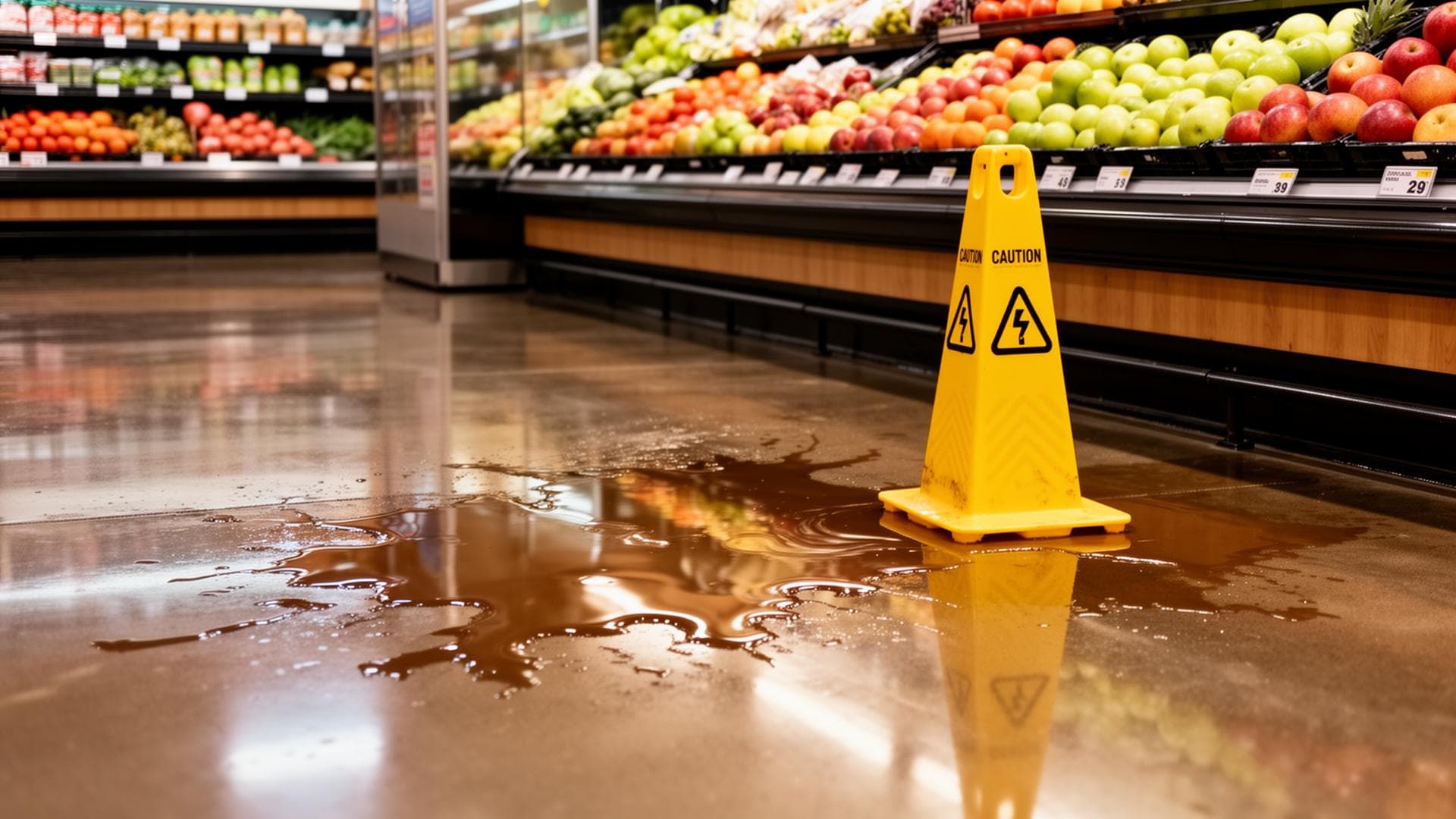
Grocery stores are among the most common locations for slip and fall injuries in the United States. According to the National Floor Safety Institute (NFSI), slip and fall accidents account for over 1 million emergency room visits annually, and a significant portion occur in retail environments. Spilled liquids, freshly mopped floors, produce debris, leaking refrigeration units, and condensation near frozen food aisles create constant hazards for shoppers.
What Is the Store's Legal Duty to Keep You Safe?
Under premises liability law, grocery stores owe customers — who are legally classified as invitees — the highest duty of care. This means the store must: regularly inspect aisles for hazards, promptly clean up spills and debris, place warning signs when floors are wet, maintain flooring in safe condition (no cracked tiles, loose mats, or uneven surfaces), and ensure adequate lighting throughout the store. The key legal question is whether the store knew or should have known about the hazard and failed to address it within a reasonable time.
How Do You Prove a Grocery Store Was Negligent?
Proving negligence in a grocery store slip and fall requires establishing: Notice — the store had actual or constructive notice of the hazard. Constructive notice means the hazard existed long enough that a reasonable inspection would have discovered it. Failure to act — the store failed to clean the hazard, warn customers, or barricade the area. Causation — the hazard directly caused your fall and injuries. Critical evidence includes: surveillance camera footage (stores typically retain footage for 30-90 days — act fast), incident reports filed at the time of the fall, witness statements from other shoppers or employees, maintenance and inspection logs, and your medical records documenting injuries sustained.
What Compensation Can You Recover?
Grocery store slip and fall victims can recover: medical expenses (emergency care, surgery, physical therapy, future treatment), lost wages and reduced earning capacity, pain and suffering, and in cases of gross negligence (e.g., repeated failures to address known hazards), punitive damages. Insurance companies for major grocery chains are experienced at denying these claims — they'll argue you weren't watching where you were going or that the spill had just occurred. An experienced attorney can counter these defenses. Call Bond Legal at (866) 423-7724 for a free consultation.