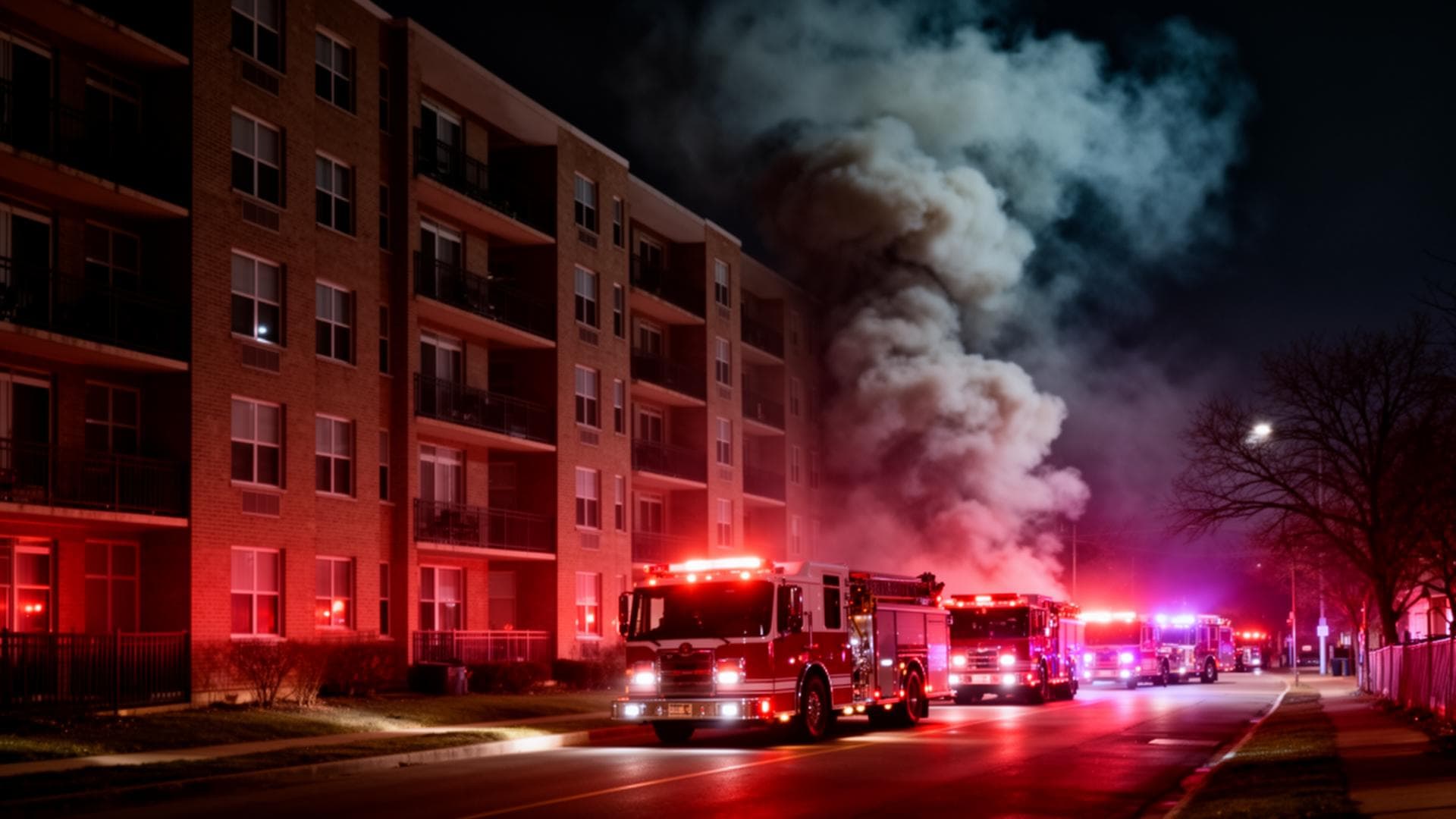
Every year, apartment fires injure thousands of tenants and kill hundreds across the United States. According to the National Fire Protection Association (NFPA), fire departments respond to an average of 100,200 apartment building fires annually, causing approximately 400 civilian deaths, 3,825 injuries, and $1.6 billion in direct property damage. Many of these fires are directly attributable to landlord negligence — failures in maintenance, fire safety equipment, and building code compliance that put tenants' lives at risk.
Common Causes of Apartment Fires Linked to Landlord Negligence
Faulty or Outdated Electrical Wiring: Electrical fires are the leading cause of apartment fires. Aging wiring, overloaded circuits, improper repairs, and failure to upgrade outdated electrical systems (particularly aluminum wiring and knob-and-tube wiring) create constant fire hazards. Landlords are responsible for maintaining safe electrical systems.
Non-Functioning Smoke Detectors and Fire Alarms: Working smoke detectors cut the risk of dying in a fire by 55%. Yet landlords routinely fail to install, maintain, test, or replace smoke detectors and fire alarm systems. In virtually every state, landlords are legally required to provide functioning smoke detectors in every unit and on every floor.
Blocked or Locked Fire Exits: Fire escape routes must be clear, accessible, and properly maintained. Landlords who chain fire exits, store materials in stairwells, or fail to maintain fire escapes create death traps. Lack of Fire Sprinklers: While not required in all buildings, fire sprinklers reduce death rates in fires by 87%. When sprinkler systems are present but not maintained, landlords bear liability for failures.
Failure to Address Known Hazards: Exposed heating elements, flammable materials in common areas, defective gas lines, improper storage of hazardous materials, and unrepaired fire damage from previous incidents. Inadequate Building Maintenance: Deteriorating roofing, crumbling fireproofing materials, damaged fire-rated doors, and failing HVAC systems all increase fire risk.
Legal Theories for Holding Landlords Accountable
Negligence: The landlord had a duty to maintain safe premises, breached that duty, and the breach caused the fire or worsened its consequences. Building Code Violations: Violations of local fire codes and building codes are often treated as 'negligence per se' — meaning the violation itself establishes negligence without requiring further proof. Warranty of Habitability: In most states, landlords have an implied duty to provide habitable housing. A building that violates fire safety codes is uninhabitable.
Premises Liability: Landlords are liable for injuries caused by dangerous conditions on their property when they knew or should have known about the hazard. Wrongful Death: When apartment fires kill tenants, their families can pursue wrongful death claims against negligent landlords, property management companies, and building owners.
Damages Available to Apartment Fire Victims
Tenants injured in apartment fires may recover: medical expenses for burn injuries, smoke inhalation, and respiratory damage (treatment for severe burns can exceed $1 million). Lost wages and earning capacity. Pain and suffering. Emotional distress and PTSD. Replacement cost of personal property destroyed in the fire. Temporary housing and relocation costs. Funeral and burial expenses in wrongful death cases. Punitive damages when landlord conduct is particularly egregious (knowing violations, repeated code citations ignored).
Steps to Take After an Apartment Fire
1. Seek medical attention — even if you feel fine. Smoke inhalation injuries can be delayed and life-threatening. 2. Report the fire to your local fire department and request a copy of the fire investigation report. 3. Document everything — photograph damage, your injuries, the condition of smoke detectors, fire exits, and any code violations you observed before the fire. 4. Preserve evidence — save burned clothing, medical records, lease agreements, and any prior written complaints to the landlord about fire safety issues. 5. Do not sign releases from the landlord or their insurance company. 6. Contact a fire litigation attorney — most handle cases on contingency.
Bond Legal represents tenants injured in apartment fires nationwide. Free consultations. pay no attorney fees unless we recover compensation for you. Call (866) 423-7724.