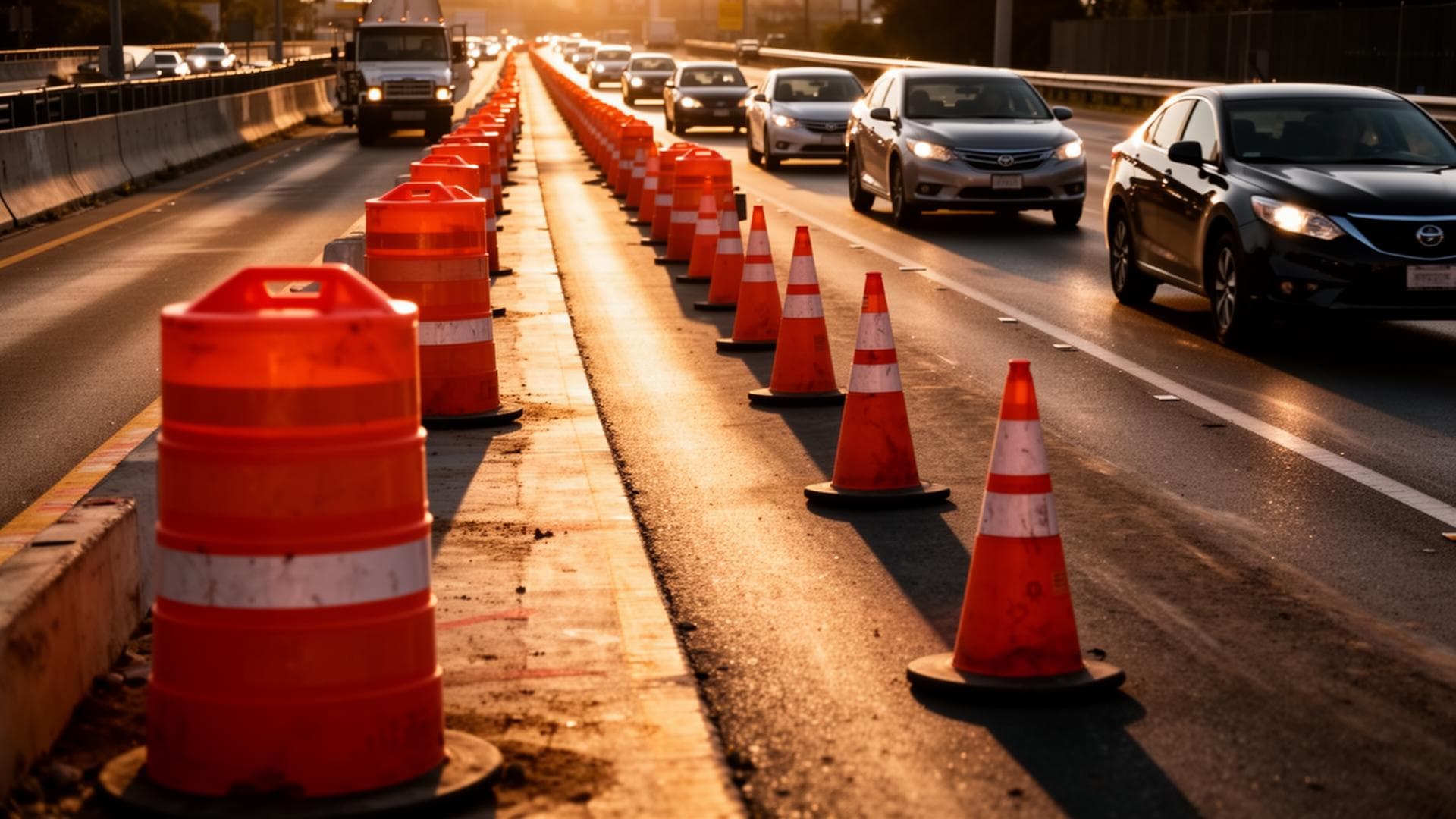
Construction zone accidents are a growing crisis on American roadways. According to the FHWA, work zone crashes kill over 800 people and injure approximately 44,000 annually. As the nation's aging infrastructure drives increased road construction — fueled by the $1.2 trillion Infrastructure Investment and Jobs Act — work zone crashes are projected to increase significantly through 2030.
Why Construction Zones Are Uniquely Dangerous
Work zones create a perfect storm of hazards: Sudden speed reductions — drivers must rapidly decelerate from highway speeds to 45 mph or less. Lane shifts and closures — unfamiliar traffic patterns, narrow lanes, and concrete barriers reduce room for error. Distracted workers and equipment — heavy machinery, workers on foot, and equipment crossing traffic lanes create unpredictable hazards. Inadequate signage or warning — poorly placed or insufficient advance warning signs leave drivers unprepared.
Uneven road surfaces — milled pavement, gravel, temporary patches, and lane-to-shoulder drop-offs can cause loss of vehicle control. Reduced visibility — dust, equipment, and barriers can obstruct sightlines. Night work — an increasing percentage of construction occurs at night, combining darkness with the above hazards.
Multi-Party Liability in Construction Zone Crashes
Construction zone accidents often involve liability beyond just the drivers involved: The construction company/contractor — for failing to implement adequate traffic control measures, improper signage, unsafe lane closures, or workers/equipment encroaching on traffic lanes. The government entity (DOT/municipality) — for approving inadequate traffic control plans, failing to inspect and enforce work zone safety, or designing dangerous temporary traffic patterns.
Subcontractors — work zone projects often involve multiple contractors, each responsible for different aspects of traffic control. Equipment operators — operators of construction vehicles and heavy equipment who create hazards by backing into traffic or failing to use proper signals. Other drivers — motorists who were speeding, distracted, or failed to obey work zone traffic controls.
Work Zone Traffic Control Standards (MUTCD)
The Manual on Uniform Traffic Control Devices (MUTCD) establishes federal standards for work zone traffic control. Violations of MUTCD standards by contractors or government entities are strong evidence of negligence. Key MUTCD requirements include: Advance warning signs — posted at specific distances before the work zone to give drivers adequate time to react. Channelizing devices — cones, barrels, and barriers to guide traffic safely through the work zone.
Speed limit reductions — posted with adequate advance notice. Flaggers — properly trained flaggers must follow specific signaling procedures. Crash attenuators — energy-absorbing barriers required at the start of concrete barriers to reduce the severity of end-on crashes. An attorney experienced in work zone crashes can compare the actual site conditions against MUTCD standards to establish contractor or government negligence.
Enhanced Penalties and Damages
Most states impose enhanced penalties for traffic violations in work zones — fines are typically doubled, and some states impose additional criminal penalties for reckless driving in construction zones. These enhanced penalties reflect the recognized danger of work zones and support higher civil damages.
Additionally, if a construction worker is injured or killed by a negligent driver, the worker (or their family) may have claims against both the negligent driver AND their employer (if the work zone was unsafely configured). Workers' compensation may apply, but third-party claims against the negligent driver are separate and not subject to workers' comp limitations.
Protecting Your Claim After a Work Zone Crash
1. Photograph the work zone conditions — signage, lane markings, barriers, equipment positions, and any apparent safety deficiencies. 2. Note the contractor name and any company markings on vehicles/equipment. 3. Report to police and ensure the report documents work zone conditions. 4. If a government entity is potentially liable, be aware of strict notice deadlines (30-90 days in most states). 5. Contact an attorney immediately — work zone evidence (traffic control plans, inspection records, contractor communications) must be preserved before it's lost or altered.