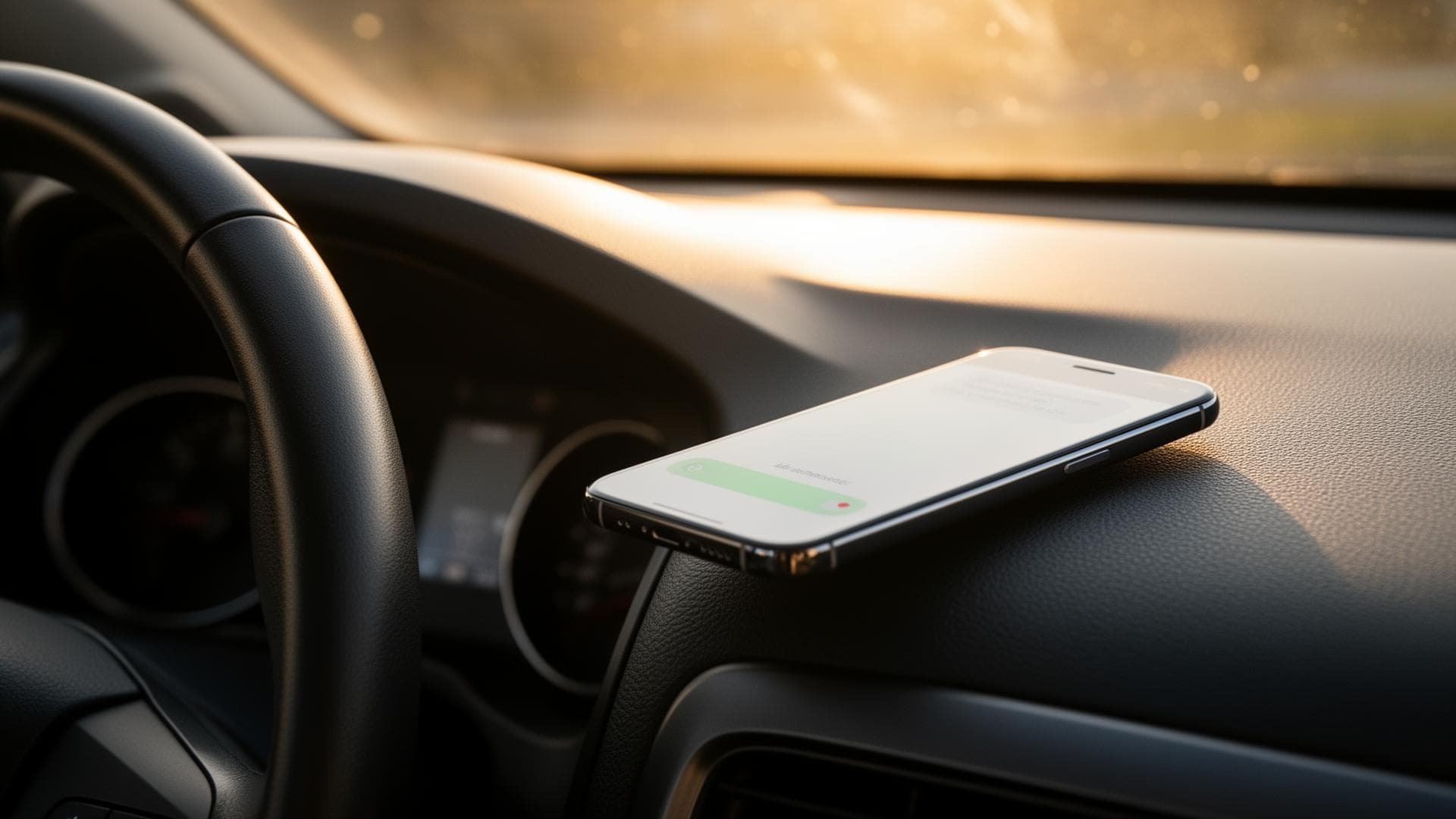
Distracted driving has surpassed drunk driving as the leading cause of motor vehicle accidents in the United States. According to the NHTSA, distracted driving claimed 3,308 lives in 2022 alone — and experts believe the actual number is significantly higher because distraction is notoriously underreported at crash scenes.
What Counts as Distracted Driving?
The NHTSA defines distracted driving as any activity that diverts attention from driving. There are three categories of distraction:
Visual distraction — taking your eyes off the road. Manual distraction — taking your hands off the wheel. Cognitive distraction — taking your mind off driving. Texting is considered the most dangerous because it combines all three types simultaneously. At 55 mph, sending or reading a text takes your eyes off the road for approximately 5 seconds — the equivalent of driving the length of a football field blindfolded.
Cell Phone Laws by State
As of 2025, 29 states plus D.C. ban all handheld cell phone use while driving. All 50 states have some form of distracted driving legislation, though enforcement varies dramatically. In states where Bond Legal operates — including California (which imposed some of the nation's first hands-free laws), Texas, Florida, New York, and Georgia — violations carry fines ranging from $50 to $500 for first offenses, with escalating penalties for repeat violations and accidents.
Critically, a distracted driving citation creates a per se negligence argument in your civil case. Even without a citation, phone records, app data, and vehicle infotainment logs can prove the other driver was distracted at the time of the crash.
How to Prove Distracted Driving in Your Case
Proving distraction requires swift evidence preservation. Key sources include: Cell phone records — subpoenaing the at-fault driver's call logs, text message timestamps, and data usage at the time of the crash. App activity data — social media posts, Snapchat timestamps, Instagram activity, and dating app usage can all be timestamped to the moment of the collision.
Vehicle infotainment system data — modern vehicles log Bluetooth connections, voice commands, and touchscreen interactions. Dashboard and traffic camera footage — may show the driver looking down or holding a device. Witness testimony — passengers, other drivers, and pedestrians who observed the driver's behavior. Event Data Recorder (EDR) — the vehicle's 'black box' can show whether the driver braked, swerved, or took any evasive action before impact.
The Legal Standard: Negligence Per Se
In most states, violating a distracted driving law constitutes negligence per se — meaning the court automatically finds the driver was negligent if they were violating the statute at the time of the crash. This eliminates the need to prove the driver 'should have been more careful' and significantly strengthens your case.
Even in states without negligence per se, evidence of distraction is powerful proof of ordinary negligence. Jurors universally condemn texting while driving, making these cases particularly strong at trial.
Settlement Values in Distracted Driving Cases
Distracted driving cases often command premium settlement values for several reasons: clear liability, strong jury appeal, potential for punitive damages (especially for repeat offenders or egregious behavior like video-chatting while driving), and the ability to pursue the driver's employer if they were on a work call or responding to work communications.
If the distracted driver was using a phone for work purposes, their employer may be vicariously liable under respondeat superior — significantly increasing available insurance coverage and recovery potential.
What to Do If You're Hit by a Distracted Driver
1. Call 911 and report that you believe the other driver was on their phone. 2. Ask the responding officer to note suspected distraction in the police report. 3. Photograph the other driver's phone position if visible. 4. Get witness contact information — anyone who saw the driver on their phone. 5. Do NOT delay — contact an attorney immediately to preserve cell phone records before they're deleted or overwritten. 6. Do NOT accept a quick settlement — distracted driving cases are worth significantly more than the initial offer.