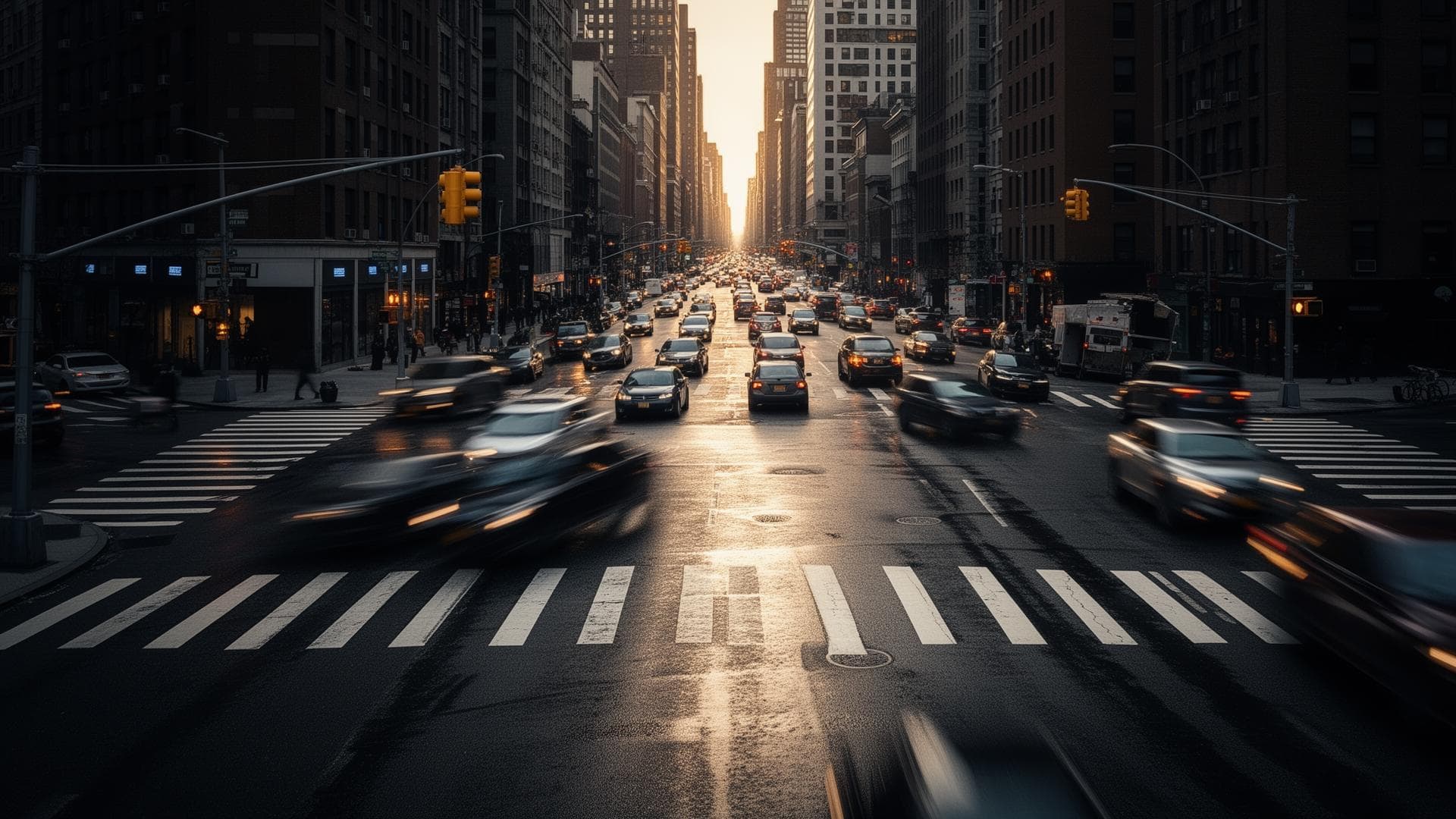
Intersection accidents are the most dangerous type of motor vehicle collision in the United States. According to the Federal Highway Administration (FHWA), approximately 50% of all traffic injuries and 20% of all traffic fatalities occur at or near intersections. That translates to roughly 2.5 million intersection crashes annually.
Why Intersections Are So Dangerous
Intersections create conflict points — locations where the paths of two or more vehicles cross. A standard four-way intersection has 32 potential vehicle-to-vehicle conflict points, plus additional pedestrian and cyclist conflicts. The more complex the intersection (multiple turn lanes, unusual angles, poor sightlines), the more opportunities for error.
The most common causes of intersection accidents include: Running red lights or stop signs — the #1 cause, responsible for approximately 165,000 crashes per year. Left-turn misjudgments — turning drivers often misjudge the speed and distance of oncoming traffic. Right-of-way confusion — particularly at uncontrolled intersections and four-way stops. Obstructed visibility — buildings, parked vehicles, foliage, or other obstructions blocking sightlines. Distracted driving — drivers approaching intersections while looking at phones rather than traffic signals.
Left-Turn Accident Liability
Left-turn accidents are among the most litigated intersection crashes. The general rule across all 50 states: the left-turning driver has a duty to yield to oncoming traffic and bears a strong presumption of fault when a collision occurs. However, this presumption is rebuttable.
The left-turning driver may NOT be at fault if: the oncoming driver was speeding significantly, the oncoming driver ran a red light, the left-turning driver had a green arrow (protected left turn), or the oncoming driver was otherwise negligent (distracted, impaired, etc.). Your attorney should investigate all factors — a left-turn accident with a speeding oncoming driver may result in shared liability under comparative negligence principles.
Red-Light Camera and Traffic Signal Evidence
Red-light cameras and traffic signal data can be decisive evidence in intersection crash cases. Red-light camera footage captures the exact moment a driver enters an intersection against a red signal. Traffic signal timing data — obtained from the municipality's traffic engineering department — shows the exact sequence and duration of green, yellow, and red phases.
Additionally, many modern intersections have surveillance cameras operated by DOT or municipal agencies. This footage may capture the entire crash sequence. Your attorney should send a preservation request to the relevant government agency within days of the accident, as surveillance footage is typically stored on a short loop and overwritten.
Proving Fault: Key Evidence Sources
Beyond camera footage, intersection accident cases rely on: Vehicle EDR (black box) data — showing speed, braking, and throttle position approaching the intersection. Witness testimony — other drivers, pedestrians, and business owners near the intersection. Accident reconstruction — experts can calculate vehicle speeds, analyze damage patterns, and determine which vehicle entered the intersection first. Cell phone records — to establish whether either driver was distracted.
Skid mark analysis — presence or absence of skid marks indicates whether the driver attempted to stop. Traffic signal maintenance records — malfunctioning signals may shift liability to the municipality. Vehicle dashcam or passenger footage — increasingly common and often the most compelling evidence.
Government Liability for Dangerous Intersections
If an intersection has a documented history of accidents, the government entity responsible for its design and maintenance may share liability. Factors that support a government negligence claim include: Design defects — inadequate turn lanes, poor sightlines, confusing signal patterns. Maintenance failures — obscured traffic signals, faded lane markings, overgrown vegetation blocking visibility. Failure to upgrade — knowledge of a dangerous condition without taking corrective action.
Government claims have strict notice requirements — often 30-90 days from the accident. Missing this deadline can permanently bar your claim against the government entity, even if their negligence was a primary cause of the crash.
Settlement Values in Intersection Accidents
Intersection crashes often produce severe injuries because of the T-bone (side-impact) collision pattern, which provides less protection than frontal or rear impacts. Settlement values reflect this: side-impact crashes tend to produce more serious injuries (TBI, spinal cord damage, internal organ injuries) than rear-end collisions at comparable speeds, leading to higher average settlements. Cases involving red-light runners often support punitive damages claims, further increasing recovery potential.