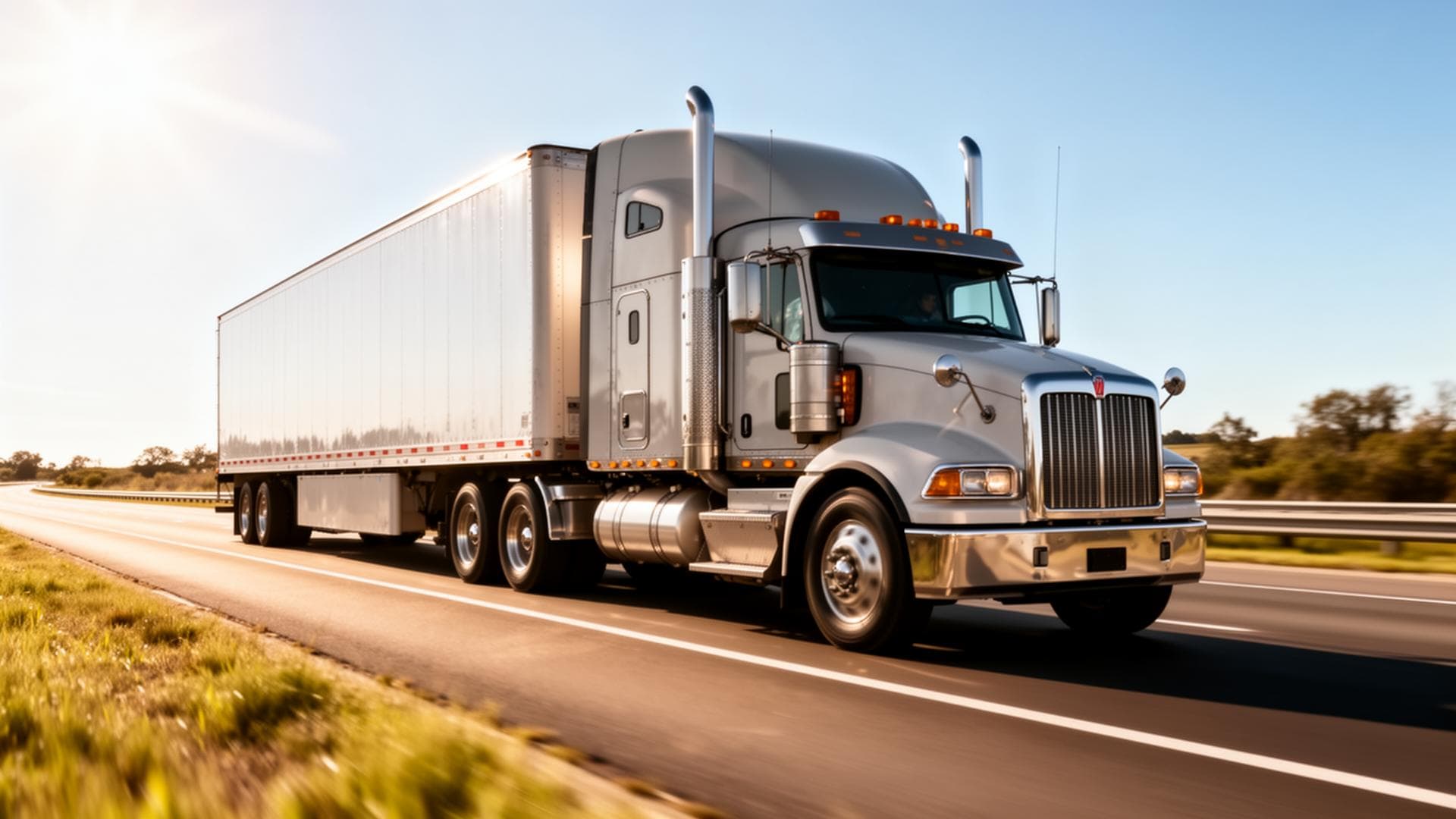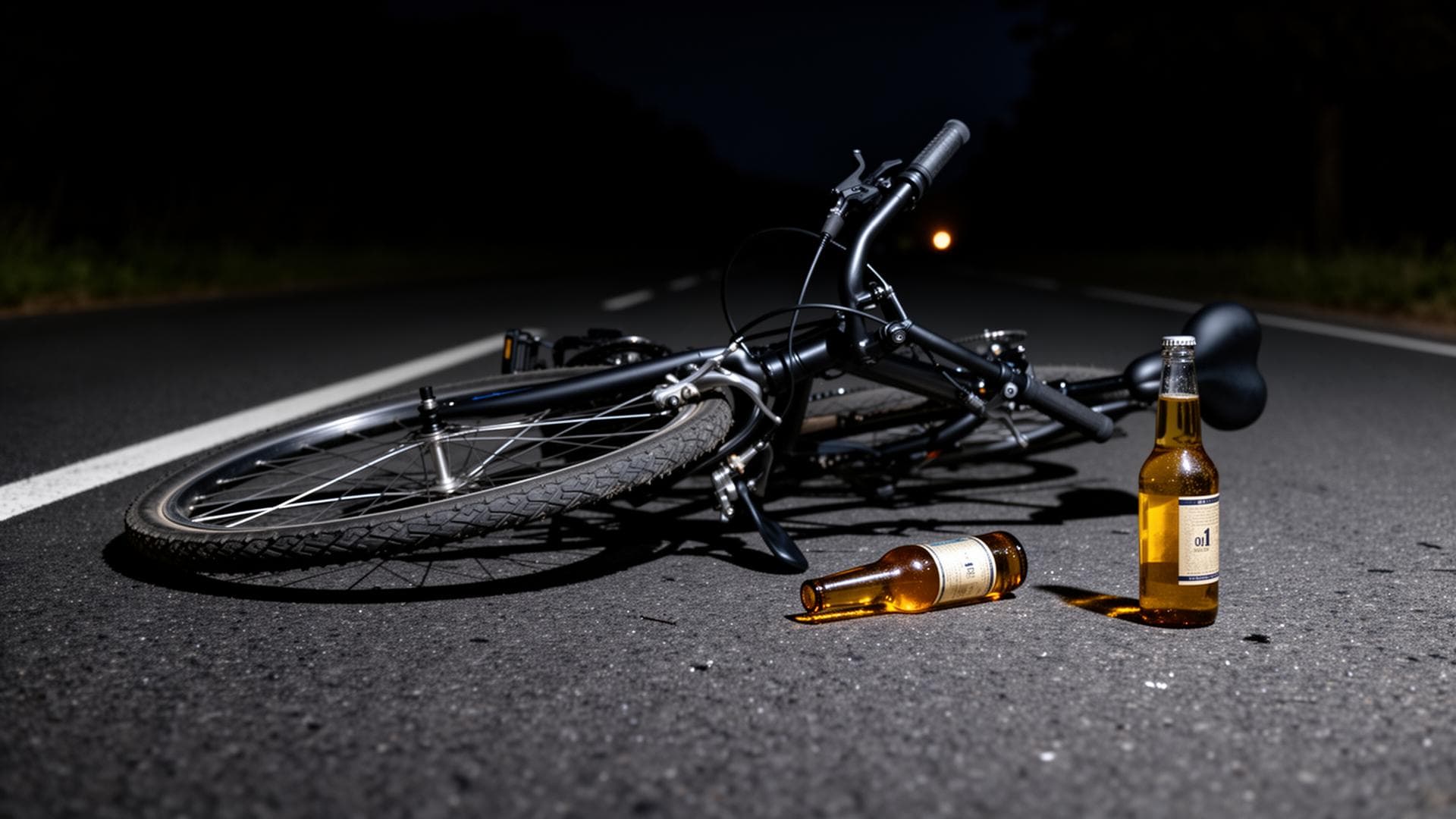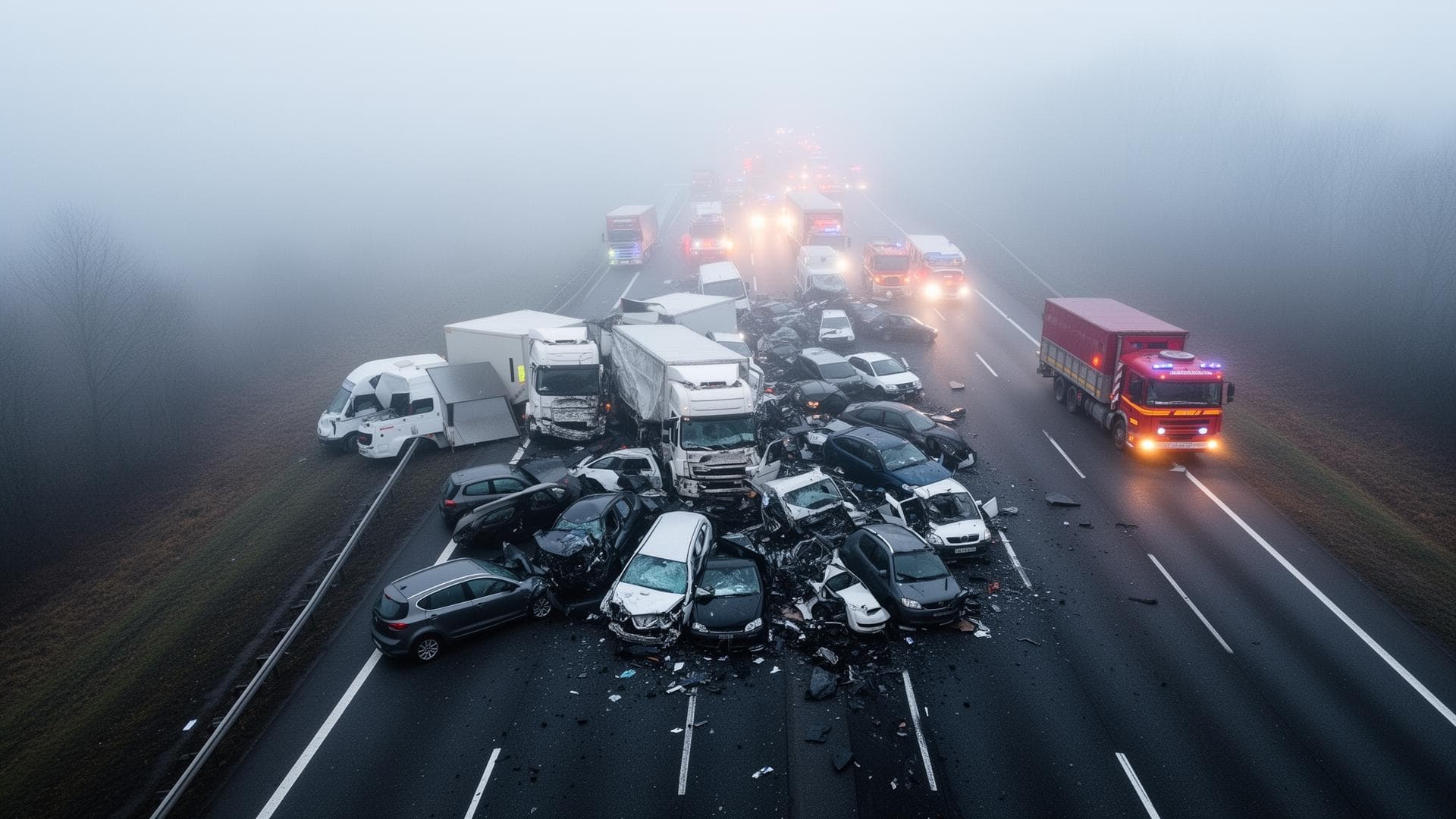
Multi-vehicle pileup accidents are among the most dangerous and legally complex crashes on American roads. These chain-reaction collisions — often involving 3 to 100+ vehicles — typically occur on highways and interstates and are frequently triggered by adverse weather, sudden stops, or a single negligent driver whose actions cascade through traffic.
How Multi-Vehicle Pileups Happen
The most common causes include: Fog and low visibility — the NHTSA identifies reduced visibility as the leading factor in large-scale pileups, particularly on interstates. Ice and wet roads — sudden loss of traction causes chain reactions as vehicles cannot stop in time. Sudden highway stops — when a lead vehicle brakes abruptly, following vehicles may not have adequate stopping distance. Distracted or drowsy driving — a single inattentive driver can trigger a cascading collision.
Speed differential — vehicles traveling at significantly different speeds on the same roadway. Construction zones — sudden lane closures and speed reductions create bottlenecks. Debris in the roadway — a tire blowout, fallen cargo, or road kill can cause sudden swerving and chain reactions.
How Fault Is Determined in a Pileup
Determining fault in a multi-vehicle pileup is significantly more complex than in a standard two-car accident. Multiple drivers may share fault, and the sequence of impacts matters enormously.
Accident reconstruction experts are often essential. They analyze: the sequence of impacts (which collision happened first), vehicle damage patterns (front, rear, side — indicating direction of force), skid marks and road evidence, EDR/black box data from multiple vehicles, traffic camera and dashcam footage, witness testimony from drivers and passengers in different vehicles.
Comparative negligence applies in most states. In a 10-car pileup, fault might be distributed among 4 or 5 drivers — with percentages allocated based on their individual contribution to the chain reaction. For example: Driver A (following too closely) — 40% at fault. Driver B (excessive speed for weather conditions) — 30% at fault. Driver C (failed brake lights) — 20% at fault. Government entity (inadequate road signage) — 10% at fault.
Multiple Insurance Policies = Greater Recovery
One advantage of multi-vehicle accidents is access to multiple insurance policies. If three at-fault drivers each carry $100,000 in liability coverage, the total available coverage is $300,000. In pileups involving commercial trucks, available coverage can reach into the millions.
Your attorney should identify every potentially liable party — including commercial vehicles, government entities responsible for road maintenance, and construction companies operating in work zones.
Common Injuries in Multi-Vehicle Pileups
Pileup injuries tend to be more severe than standard accidents because victims often sustain multiple impacts from different directions: Crush injuries — particularly when vehicles are compressed between two others. Traumatic brain injury — from multiple impact forces. Spinal cord injuries — the whipping motion from sequential impacts can cause devastating spinal damage. Burns — fuel leaks and fires are more common in large pileups. Psychological trauma — being trapped in a vehicle during a cascading pileup is deeply traumatic.
Protecting Your Claim After a Pileup
1. Stay in your vehicle if possible — secondary impacts are the greatest danger in a pileup. If you must exit, move as far from traffic as possible. 2. Call 911 immediately — large pileups require coordinated emergency response. 3. Document everything — photograph all vehicles involved, your position in the chain, weather and road conditions, and all visible damage. 4. Get contact and insurance information from every driver involved. 5. Request the full police report — it will document the sequence of events and officer's assessment of fault.
6. Seek medical attention immediately — adrenaline masks pain, and pileup injuries can be compounded by multiple impacts. 7. Contact an attorney before speaking with ANY insurance company — in a multi-party accident, each insurer will try to shift blame to the other drivers. You need representation that can navigate this complexity and pursue recovery from all available sources.