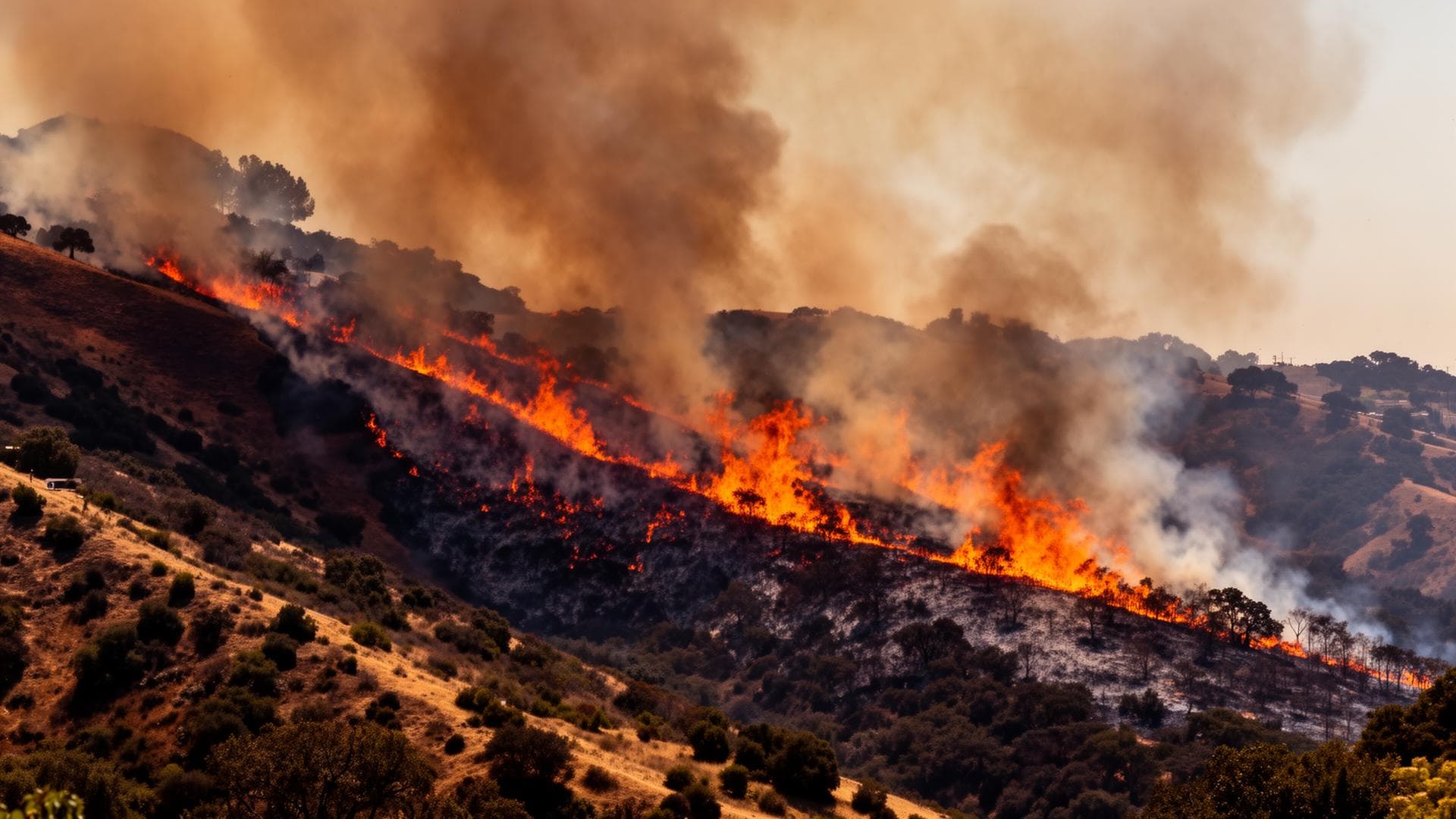
Some of America's deadliest and most destructive wildfires share a common origin: utility company negligence. While California has dominated wildfire headlines — from PG&E's Camp Fire to Edison's Eaton Fire — utility-caused wildfires are a growing threat in Texas, Colorado, Oregon, Washington, and other states experiencing drought and extreme weather conditions.
How Utility Companies Start Wildfires
The mechanism is devastatingly simple. During high-wind events, power lines can swing together and arc, vegetation can contact energized lines, or aging equipment can fail and throw sparks. In dry climates, a single spark can ignite a wildfire that burns thousands of acres within hours. Investigations have identified utility equipment as the cause of numerous major wildfires:
Camp Fire (2018, California): PG&E's nearly 100-year-old transmission lines failed during high winds, igniting the deadliest wildfire in California history. 85 people killed, 18,804 structures destroyed, entire town of Paradise erased. PG&E pleaded guilty to 84 counts of involuntary manslaughter. Dixie Fire (2021, California): PG&E equipment ignited what became the single largest wildfire in California history at 963,309 acres. Marshall Fire (2021, Colorado): Wind-driven fire destroyed over 1,000 homes in Boulder County — investigations examined utility and other ignition sources. Smokehouse Creek Fire (2024, Texas): The largest wildfire in Texas history burned over 1 million acres; lawsuits allege utility equipment played a role. Eaton Fire (2025, California): Lawsuits filed against Southern California Edison allege negligence in failing to de-energize power lines during extreme wind conditions.
Legal Frameworks for Holding Utilities Accountable
The legal theories available to wildfire victims depend on the state: California's Inverse Condemnation: California holds utility companies to a uniquely strict standard. If a utility's equipment causes a wildfire, the utility is strictly liable — regardless of whether it was negligent. Victims do not need to prove the company did anything wrong — only that its equipment caused the fire. Traditional Negligence (Most States): In Texas, Colorado, Oregon, Washington, and other states, victims typically pursue negligence claims — arguing the utility failed to maintain equipment, failed to implement safety shutoffs during dangerous conditions, failed to clear vegetation, or used equipment beyond its safe lifespan. Gross Negligence and Punitive Damages: Where utility companies had knowledge of dangerous conditions and failed to act, victims in many states can pursue punitive damages.
What Damages Can Wildfire Victims Recover?
Wildfire victims may recover compensation across multiple categories: Property Damage: Full replacement cost of homes, structures, vehicles, personal property, and landscaping. Important: replacement cost, not depreciated value. Loss of Use: Temporary housing, rental costs, and additional living expenses during rebuilding. Business Losses: Lost income, inventory destruction, and business interruption. Personal Injury: Medical treatment for burns, smoke inhalation, respiratory damage, and physical trauma. Emotional Distress: PTSD, anxiety, depression, and loss of irreplaceable personal items (family photos, heirlooms). Wrongful Death: When wildfires kill, families can pursue wrongful death claims for funeral expenses, lost financial support, and loss of companionship.
The Insurance Gap: Why Lawsuits Matter
Many wildfire victims discover that their insurance coverage falls dramatically short of their actual losses. Underinsurance is epidemic in wildfire-prone areas — the average homeowner in high-risk zones is underinsured by 20-40%. Insurance policies may not cover the full replacement cost of a home at current construction prices, extended additional living expenses during prolonged rebuilding, the full cost of debris removal (often $50,000-$200,000 alone), landscaping and hardscaping replacement, or code upgrade costs required by updated building codes.
A lawsuit against the responsible utility company allows victims to recover the full extent of their losses — including amounts that exceed insurance coverage and categories of damage (like emotional distress) that insurance doesn't cover at all.
The Claims Process for Wildfire Victims
1. Document everything: Photograph damage before cleanup begins. Create a comprehensive inventory of lost property. Keep all receipts for additional living expenses. 2. File your insurance claim promptly but do not accept a lowball settlement. 3. Do not sign anything from the utility company without consulting an attorney — utilities often approach victims with early settlement offers designed to minimize their exposure. 4. Consult a wildfire litigation attorney who can evaluate your claims under negligence and (in California) inverse condemnation theories.
Wildfire lawsuits are typically handled on a contingency fee basis — victims pay nothing unless compensation is recovered. Bond Legal represents wildfire victims nationwide. Call (866) 423-7724 for a free consultation.