Weather Doesn't Excuse Negligence
One of the most common misconceptions in car accident law is that bad weather is an excuse. It is not. Every state requires drivers to operate their vehicles in a manner appropriate for current conditions. If it's raining, you must slow down. If visibility is reduced by fog, you must increase following distance and use appropriate lighting. If roads are icy, you must drive at speeds that allow you to maintain control.
The Federal Highway Administration reports that weather-related crashes account for approximately 21% of all vehicle crashes — roughly 1.2 million crashes per year. These crashes result in nearly 5,000 deaths and over 418,000 injuries annually. Rain causes the most weather-related crashes (46%), followed by wet pavement (70% of weather-related crashes occur on wet roads), snow/sleet (18%), and ice (13%).
The Legal Standard: Reasonable Care Under the Circumstances
The legal standard for driver behavior is reasonable care under the circumstances — and weather is one of those circumstances. A driver traveling the posted speed limit on a clear, dry day is exercising reasonable care. That same driver traveling the posted speed limit on an icy road with zero visibility is negligent, because a reasonable person would have slowed down, increased following distance, or pulled over.
This means that in weather-related accidents, the at-fault driver cannot simply say 'the weather caused it.' Courts consistently hold that drivers who fail to adjust their behavior to weather conditions are negligent. Common negligent behaviors in bad weather include: driving at or above the speed limit on wet, icy, or snow-covered roads, following too closely for conditions, failing to use headlights in rain or fog, failing to clear snow and ice from the vehicle before driving, hydroplaning due to excessive speed on wet roads, and losing control on black ice at speeds that didn't allow for safe stopping.
Government Liability for Road Conditions
In some weather-related accidents, the government entity responsible for road maintenance may share liability. Government agencies have a duty to: treat roads with salt, sand, or de-icing chemicals when ice is forecast, plow snow within a reasonable time after accumulation, maintain drainage systems to prevent standing water and hydroplaning hazards, post warning signs for known hazardous conditions (fog zones, ice-prone bridges, flood-prone areas), and repair road surfaces that become dangerous when wet (worn pavement with poor drainage, potholes that collect water).
Claims against government entities involve special procedures: shorter statutes of limitations (as few as 60 days for notice of claim in some states), sovereign immunity defenses, and specific notice requirements. An experienced attorney is essential for government liability claims.
Hydroplaning Accidents
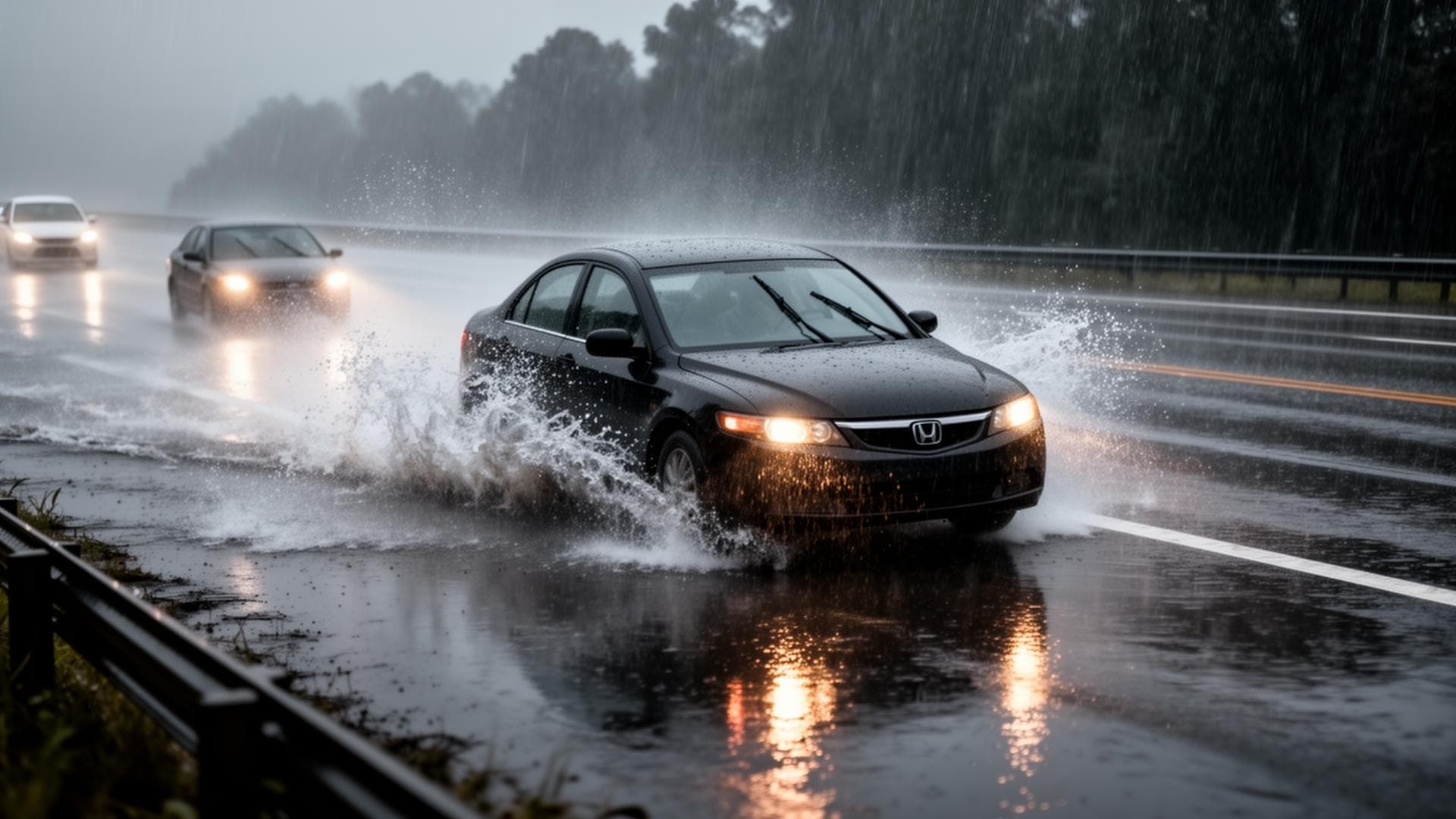
Hydroplaning occurs when a layer of water between the tires and road surface causes the vehicle to lose traction and slide uncontrollably. It can occur at speeds as low as 35 mph with as little as 1/12 inch of water on the road. Liability in hydroplaning cases typically falls on: the driver for excessive speed, worn tires, or failure to avoid standing water; the government for poor road drainage or failure to address known ponding areas; or the tire manufacturer if defective tires contributed to the loss of traction.
Black Ice Accidents
Black ice — thin, transparent ice that forms on road surfaces and is nearly invisible — is among the most dangerous weather hazards. Liability analysis in black ice cases examines: whether the driver was traveling at a speed reasonable for winter conditions (even if the road appeared clear), whether the government failed to treat a known ice-prone area (bridges, overpasses, shaded curves), and whether the driver had reason to know ice was possible (temperatures near or below freezing, recent precipitation).
Fog-Related Multi-Vehicle Pileups
Dense fog creates the conditions for catastrophic multi-vehicle pileups — chain-reaction crashes involving dozens or even hundreds of vehicles. These cases present complex liability questions because: multiple drivers may share fault, determining the 'first' collision that triggered the pileup requires extensive investigation, some drivers may have been stopped or nearly stopped when struck from behind (clearly not at fault), and government entities may be liable for failing to close roads or post warnings in known fog zones.
Protecting Your Weather-Related Accident Claim
Preserve weather data immediately — conditions change, and what was happening at the exact time and location of your crash matters. Sources include: National Weather Service historical data, local weather station records, airport weather observations (METAR reports), and weather apps that log conditions by location and time. Photograph road conditions at the scene, including standing water, ice, snow coverage, and visibility. Note whether road treatment (salt, sand) was present or absent. Check for traffic cameras or dashcam footage that captured conditions at the time of the crash.
Bond Legal has extensive experience with weather-related accident claims across all 28 states where we practice, including government liability claims for failure to maintain safe road conditions.